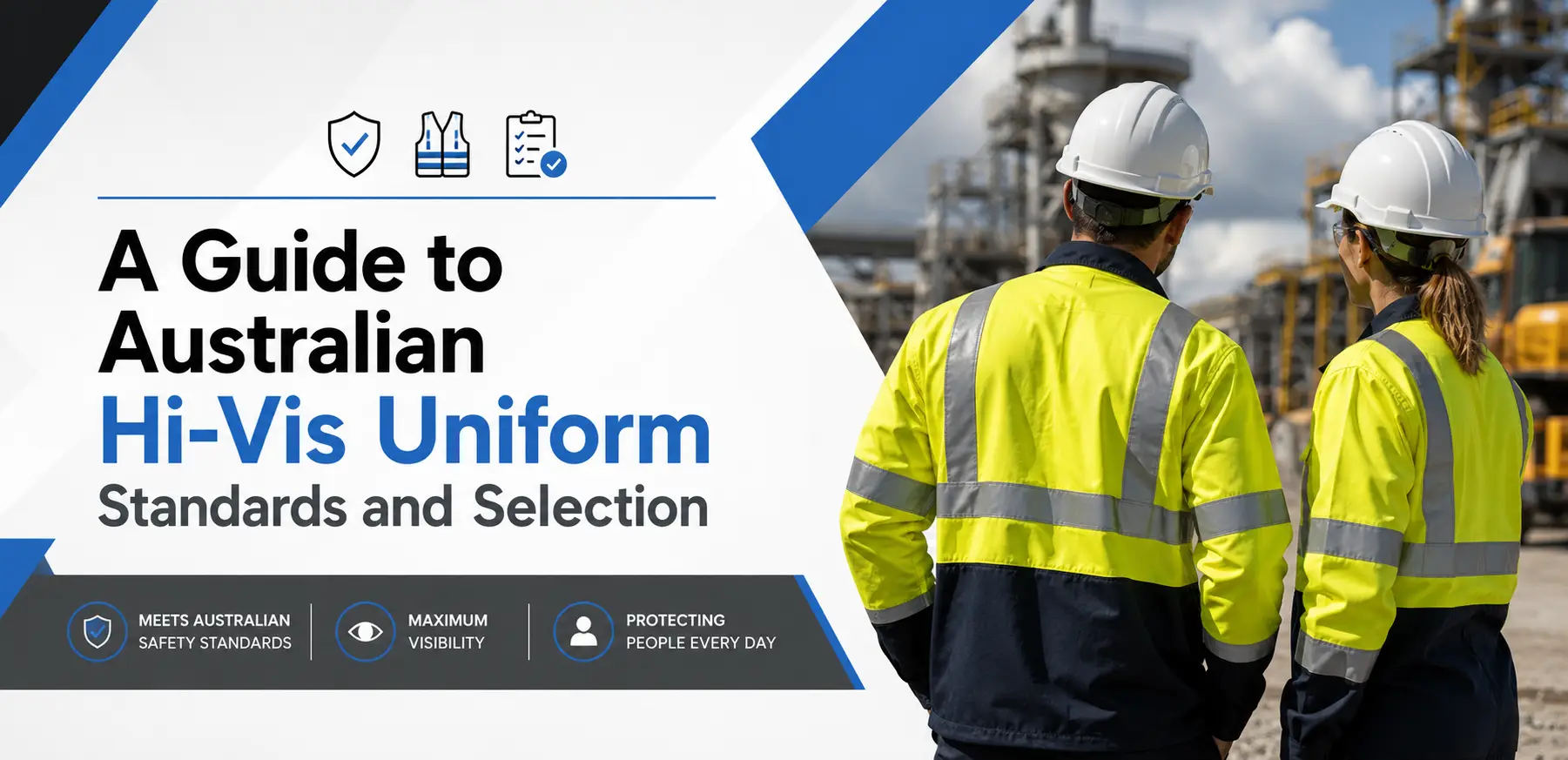
Maintaining workplace safety across industrial, commercial, and resources sectors requires reliable protective equipment. In high-risk environments such as civil construction, warehousing, transport, and mining, clear visual identification is the first line of defence against preventable workplace incidents. Equipping workers with a compliant hi vis uniform ensures that personnel remain easily visible to heavy machinery operators, vehicle drivers, and team members under all operational settings.
Understanding how to choose appropriate high visibility garments involves evaluating Australian safety standards, site-specific hazards, seasonal weather variations, and fabric performance. This guide provides a detailed overview of standard compliance requirements, garment types, material choices, and best practices for outfitting your workforce.
The Importance of Australian Safety Standards
Every employer and safety manager has a legal responsibility to ensure that all protective apparel supplied to staff adheres to recognised national benchmarks. In Australia, standards govern both the design of the finished item and the performance of the raw textiles used in production.
Compliance ensures that garments deliver predictable performance across various light levels and operational environments. When workers wear hi vis clothing that meets these exact guidelines, it significantly reduces the risk of workplace incidents.
Did You Know?
While high-visibility gear is highly effective for spotting workers around moving plant, the WHS Hierarchy of Controls classifies it as Personal Protective Equipment (PPE)—the last line of defense. Because it relies heavily on human behavior, safety experts look to pair quality hi-vis with higher-level fixes like physical fences and vehicle reversing sensors to create a truly bulletproof safety zone.
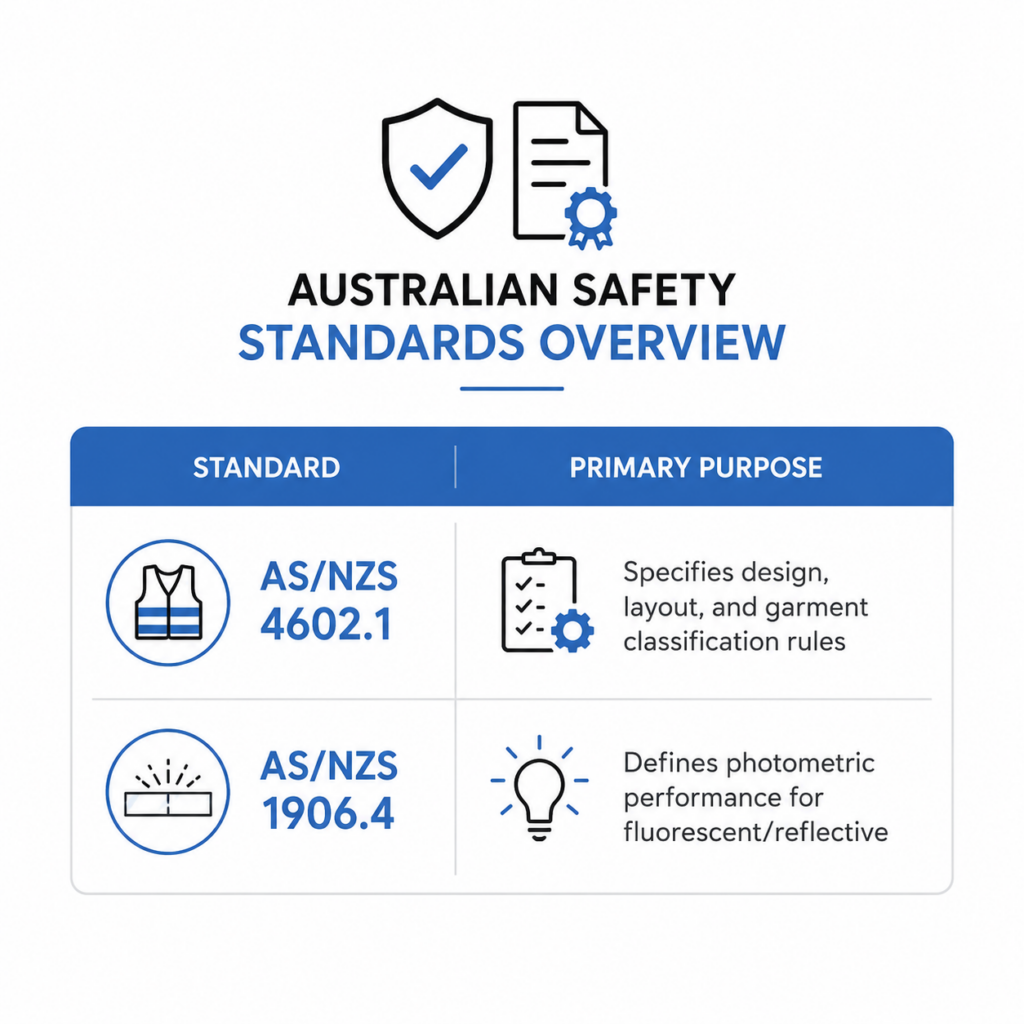
AS/NZS 4602.1 (Garment Design for High-Risk Applications)
This standard outlines the minimum design requirements for high visibility safety garments. It specifies how much high-visibility material must cover the upper torso and dictates where retroreflective tape must be positioned. While older garments were designed to meet historical benchmarks such as nzs 4602.1 2011, modern site guidelines reference updated requirements to ensure maximum worker protection.
Under this standard, garments are classified into three primary operational categories:
- Class D (Day Use Only): Intended strictly for outdoor daytime operations. These items rely on bright fluorescent background materials to distinguish the wearer against natural and artificial backgrounds.
- Class N (Night Use Only): Designed for night-time work or dark indoor environments. These garments feature retroreflective tape configured to catch vehicle headlights or direct spot lighting.
- Class D/N (Day and Night Use): Combines fluorescent background fabrics with strategically placed retroreflective tape. This setup provides continuous protection across rotating shifts and fluctuating light conditions.
AS/NZS 1906.4 (High-Visibility Materials)
This technical standard governs the raw materials used to construct protective clothing. It evaluates chromaticity, luminance, and durability over repeated washing cycles. Approved fluorescent background colours under Australian guidelines include:
- Fluorescent Yellow
- Fluorescent Orange
- Fluorescent Orange-Red
To remain fully compliant, the upper torso of a garment must feature at least 0.4 square metres of continuous fluorescent background material. Standard branding or corporate logos must never obscure this core safety area.
Essential Components of a Complete Hi Vis Uniform
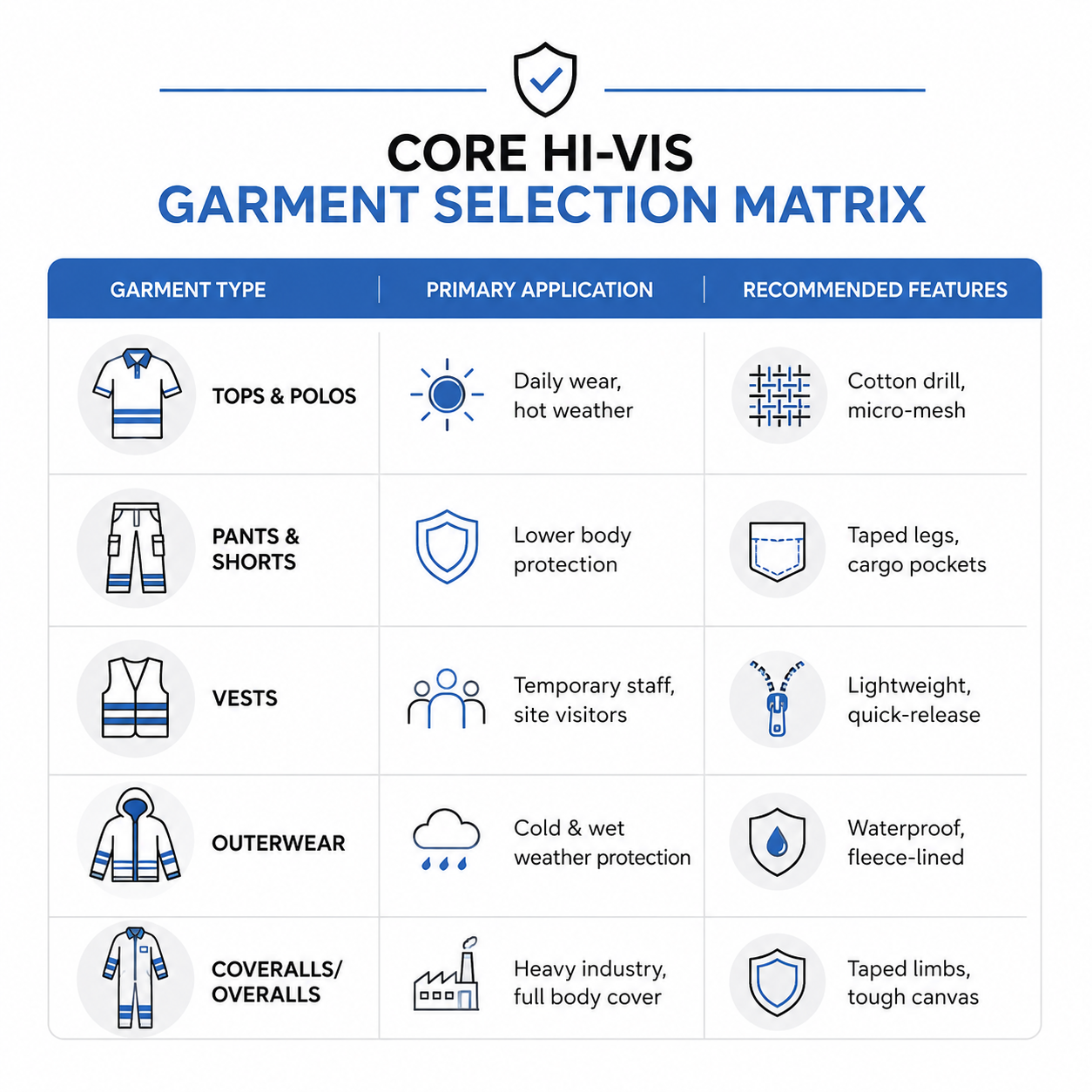
A complete high visibility wardrobe requires individual pieces tailored to specific tasks, job site demands, and shift times. Combining compliant garments allows workers to stay safe while adapting to changing daily duties.
1. Daily Upper Body Garments
- Hi Vis Shirts: Traditional button-down workplace shirts crafted from 100% cotton drill offer exceptional durability and natural flame-resistant properties. They are ideal for welding, mechanical tasks, and rough physical labor.
- Hi Vis Polos: Modern hi vis polos feature lightweight micro-mesh textiles that pull sweat away from the skin. These items are popular among logistics teams, trade contractors, and supervisory personnel operating in warm climates.
2. Lower Body Protection
- Hi Vis Pants: Lower body visibility is essential when workers are positioned behind barriers or working near low-profile machinery. High-quality hi vis pants feature reinforced stress points, utility cargo pockets, and retroreflective tape around the lower legs to highlight movement.
3. Quick Layering and Visitor Gear
- Hi Vis Vests: Simple, lightweight hi vis vests are ideal for warehouse personnel, delivery drivers, site auditors, and temporary visitors. Quick-release hook-and-loop fasteners ensure the garment easily tears away if caught in machinery or moving components.
4. Cold Weather and Outerwear Protection
When winter arrives or shifts extend into the early morning, workers require insulated layers that maintain high visibility without hindering movement:
- Hi Vis Sweatshirts: Soft fleece hi vis sweatshirts provide essential warmth during cool indoor or outdoor shifts while keeping the wearer visible.
- Hi Vis Hoodies: Comfortable hi vis hoodies feature adjustable head covers to shield workers from cold draughts on wind-exposed sites.
- Hi Vis Jackets: Heavy-duty, waterproof hi vis jackets protect workers operating in harsh outdoor conditions, featuring seam-sealed outer shells and multi-pocket layouts.
5. Full-Body Coverage Solutions
- Hi Vis Coveralls: Heavy-duty hi vis coveralls offer full-body protection against dirt, dust, and non-hazardous splatters, making them standard apparel in mining and industrial plants.
- Hi Vis Overalls: Action-back hi vis overalls deliver maximum torso and leg protection while providing flexibility for bending, crawling, and climbing.
Selecting Workwear Based on Environment and Climate
Australia features diverse climatic regions, ranging from tropical northern heat to freezing southern winter mornings. Selecting appropriate apparel requires careful consideration of local climate factors alongside specific site hazards.
Managing Heat and Solar Radiation
Working outdoors during summer presents significant heat stress risks. Choosing garments made from breathable fabrics helps regulate body temperature by promoting air circulation and evaporation. Lightweight cotton drill and moisture-wicking polyester blends keep workers comfortable during long summer shifts. Furthermore, garments featuring sun protection ratings up to UPF 50+ shield skin from harmful ultraviolet radiation.
Adapting to Adverse Weather
Outdoor workers often encounter sudden rain, fog, and wind. Selecting outerwear tailored to the local weather condition ensures workers remain dry and warm. Rainproof jackets with sealed seams, storm flaps, and concealed hoods keep water out without compromising compliance under night-time illumination.
Industry-Specific Requirements
- Construction Sites: Garments used on busy construction sites must withstand abrasive surfaces, sharp equipment, and heavy handling. Reinforced stitching, durable canvas weaves, and dirt-concealing dark lower panels prolong garment service life.
- Rail and Transport Hubs: Rail networks often mandate specific fluorescent orange background garments to avoid confusion with green or yellow signal lights.
- Roadworks and Traffic Control: Workers managing roadside traffic require Class D/N garments featuring high-grade retroreflective tape loops around the arms, torso, and legs to maximise human outline recognition.
Custom Branding and Logo Guidelines
Many organizations choose to customise hi vis uniforms with embroidered or screen-printed company logos. Custom branding promotes a professional corporate image and makes personnel easy to identify on multi-contractor job sites. However, branding must be carefully planned to maintain garment compliance:
- Preserve Fluorescent Area: Logos printed on the chest or back must not reduce the total fluorescent background area below the mandatory 0.4 m² threshold on the upper torso.
- Avoid Tape Coverage: Badges, text, or pockets must never overlap or cover any portion of the retroreflective tape.
- Non-Flashing Materials: Decorative elements should be non-reflective and attached securely to prevent fraying or peeling over time.
Maintaining Your High Visibility Garments
Proper care and maintenance extend the lifespan of protective garments and preserve their safety attributes. Dirt, oil, and grime buildup diminish the brilliance of fluorescent dyes and reduce the performance of reflective strips over time.
- Follow Wash Labels: Wash garments in cold or warm water using mild detergents. Avoid harsh bleach or fabric softeners, which break down retroreflective coatings and dull fluorescent dyes.
- Wash Inside Out: Turning clothing inside out before washing protects reflective tape from surface abrasion against zippers and buttons.
- Line Dry in Shade: Prolonged exposure to intense sunlight while drying can fade fluorescent dyes. Dry garments inside out in a shaded area whenever possible.
- Regular Inspection: Inspect garments regularly for torn seams, damaged reflective tape, or heavy staining. Replace degraded apparel promptly to maintain full site compliance.
Selecting high-quality hi vis uniforms designed to meet established australian safety standards protects your workforce and fulfills corporate safety obligations. Outfitting teams with comfortable, durable clothing tailored to their specific work environment lowers the risk of accidents while offering employers complete peace of mind.